Mason Jar Sourcing Guide: Capacity, Glass, Lids and Quality Checks
Mason jars are widely used for honey, jam, pickles, sauces, spices, dry food and household storage. They may look simple, but sourcing the right mason jar involves more than choosing a shape from a catalogue.
For wholesale buyers, the key points are usually capacity, glass material, jar shape, lid and seal, decoration, food-contact requirements, order quantity and delivery time. These details should be confirmed before production, especially when the jars will be used for food packaging.
At Creative Package, we supply glass jars for food packaging, storage, cosmetics, candles and other applications, with options for different capacities, shapes, closures and customization requirements.
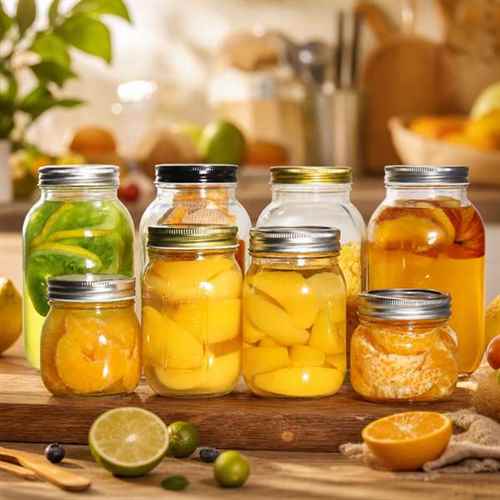
Why Mason Jar Specifications Matter
A common problem in glass jar sourcing is starting with a general request such as “500ml mason jar” without defining the rest of the specification.
Different suppliers may quote different glass thicknesses, mouth finishes, lids or sealing systems even when they use the same capacity. This makes samples difficult to compare and can lead to changes after the order has already entered production.
For a smoother purchasing process, buyers should confirm the following points first:
- Jar capacity and dimensions
- Glass type and color
- Jar shape and mouth finish
- Lid material and closure style
- Seal material and sealing performance
- Printing or surface decoration
- Food-contact documentation
- MOQ, inspection and lead time
A clear specification also makes it easier to compare quotations from different glass jar manufacturers.
1. Choose the Right Mason Jar Capacity
Capacity should be decided according to the actual product rather than the appearance of the jar.
Common mason jar sizes range from small retail containers to larger food storage formats. Creative Package offers glass jar options from approximately 200 ml to 1500 ml, depending on the product design.
For example:
- 200–250 ml: spices, small food products and sample-size packaging
- 500 ml: jam, honey, sauces, pickles and general food packaging
- 750–1000 ml: larger food products and household storage
- 1500 ml: bulk food storage and larger household applications
The nominal capacity is only one part of the specification. Buyers should also confirm the fill level, headspace, mouth opening and available labeling area.
For food products, the final jar size should be checked against the filling process and the requirements of the destination market.
2. Select Glass Material and Color
The glass material affects the jar's appearance, durability and application.
Mason-style jars can be produced using soda-lime glass or borosilicate glass, depending on the required performance and application. Clear glass remains one of the most common options because it allows consumers to see the product inside.
Other glass colors can also be considered when the packaging needs additional visual differentiation or light protection.
When comparing glass jars from different suppliers, buyers should not look only at the color. It is better to confirm:
- Glass material
- Jar weight
- Wall thickness
- Color consistency
- Surface quality
- Mouth finish
- Dimensional tolerance
These details are especially important for large-volume orders, where small differences can become visible across thousands of pieces.
3. Match the Lid with the Jar
The lid is not simply an accessory. It is part of the complete packaging system.
Creative Package glass jars can be matched with different closure options, including:
- Tinplate screw caps
- Aluminum lids
- Plastic lids
- Wooden lids
- Bamboo or wood-style lids
- Snap-on closure formats
For food packaging, the seal is equally important. Food-grade silicone or rubber sealing components can be used depending on the closure design.
The buyer should confirm the complete combination of jar mouth + lid + seal, rather than selecting each component separately.
For example, a decorative wooden lid may be suitable for dry food or storage products, while a tinplate twist-off lid may be more appropriate for food products that require a tighter closure.
The important question is not only whether the lid looks good, but whether it provides the required sealing performance during filling, storage and transportation.
4. Consider Decoration and Customization
Mason jars can be customized beyond the basic shape and size.
Depending on the product, common decoration options include:
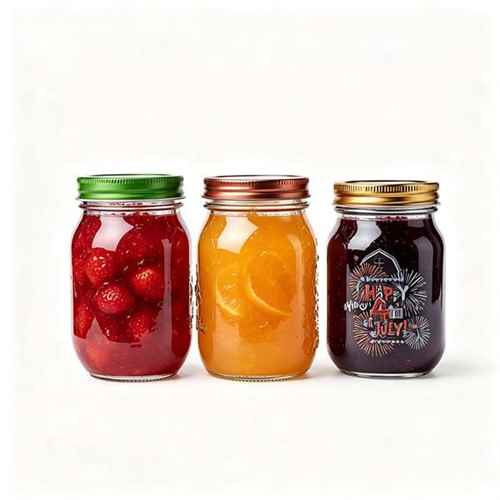
- Screen printing
- Hot stamping
- Decals
- Printed logos
- Custom labels
- Surface color customization
The right decoration method depends on the jar surface, artwork, order quantity and target price.
For example, screen printing can create a direct branded appearance on the glass, while labels provide more flexibility when different product designs need to share the same jar.
For food packaging, buyers should also confirm whether any coating or decoration comes into contact with the product. This is particularly important when selling glass food containers into markets with specific food-contact requirements.
5. Check Food-Contact Compliance Before Production
Food-contact compliance should be discussed during the quotation stage, not after production.
The required documentation depends on the destination market and the application. A buyer may need product test reports, a Certificate of Analysis, material information or other supporting documentation.
For the European market, food-contact glassware is generally considered under the broader food-contact framework and good manufacturing practice requirements. The specific requirements should be confirmed according to the destination country and application.
For the United States, additional requirements may apply to coatings, closures and other components that come into contact with food.
This is why simply asking a supplier for “FDA approved glass” is usually not enough. A better RFQ should clearly state:
Product + intended use + destination market + required documents.
This gives the supplier a much clearer basis for checking the appropriate compliance information.
6. Quality Control for Glass Jars
Glass packaging needs to be checked at both the product and packaging levels.
Typical quality-control points include:
- Glass appearance and surface defects
- Dimensions and weight
- Mouth and closure compatibility
- Sealing performance
- Thermal shock resistance where applicable
- Lead and cadmium testing where required
- Decoration quality
- Carton and internal protection
For long-distance export shipments, packaging protection is particularly important. Glass jars can be damaged by impact during loading, unloading and transportation if there is not enough separation between individual pieces.
Dividers, foam cushioning and suitable cartons can help reduce the risk of breakage. Drop testing and pre-shipment inspection can also be included in the purchasing plan.
For bulk orders, buyers should agree on inspection requirements and AQL before production starts rather than waiting until the goods are ready to ship.
7. Match the Jar to the Product
The same glass jar shape can be used for different products, but the packaging requirements are not always the same.
Honey
Honey packaging usually requires a suitable food-grade glass jar and a reliable closure. Capacity should be selected according to the intended retail fill weight and label design.
Jam and Jelly
Jam and jelly jars often use glass containers with metal screw or twist-off lids. The jar opening, filling process, headspace and sealing method should be confirmed together.
Pickles and Preserved Food
Pickles and preserved vegetables require reliable sealing and food-contact materials. The jar and lid combination should be evaluated according to the filling and processing method.
Coffee and Dry Food
For coffee, spices and dry food, moisture protection becomes more important. Airtight or well-sealed closures can help protect the contents during storage.
Spices
Small glass jars are commonly used for spices and seasoning products. For these applications, buyers should also consider the available labeling area and whether direct printing or labels are more suitable.
Candles and Home Fragrance
Glass jars are also widely used for candle and home fragrance packaging. In this case, heat resistance, jar geometry and compatibility with the candle filling process should be considered in addition to appearance.
MOQ, Production and Lead Time
For wholesale glass jar sourcing, MOQ and lead time should be discussed together.
Creative Package provides OEM and ODM packaging services and supports customized glass jar development. Standard products can be quoted according to capacity, closure, decoration and order quantity, while custom designs may require additional development time.
For larger orders, buyers should also consider production capacity and seasonal demand. A supplier that can provide samples quickly may still require additional time for customized molds, printing or special closures.
It is therefore better to confirm the lead time for the actual order quantity and specification, rather than relying on a general delivery estimate.
Why Work with a Glass Jar Manufacturer?
For buyers sourcing glass jars for long-term projects, working directly with a manufacturer can simplify communication between product design, production and quality control.
Creative Package Group operates multiple production bases and provides packaging solutions covering glass containers, PET preforms, plastic packaging, aluminum cans and caps and closures. The company also provides OEM and ODM support, design assistance and quality-control services for international buyers.
This broader packaging capability can be useful when a project requires more than one type of packaging, such as glass jars together with metal lids, PET packaging or other food containers.
Conclusion
A good mason jar is not simply the right shape or capacity. It is a combination of the glass jar, closure, seal, decoration, product requirements and destination-market requirements.
Before placing a bulk order, buyers should confirm the capacity, glass material, mouth finish, lid, sealing method, decoration, food-contact documentation, inspection requirements, MOQ and delivery schedule.
Once these specifications are clear, it becomes much easier to compare suppliers, control costs and avoid changes during production.
Creative Package supplies wholesale and custom glass jars for food, household storage, cosmetics, candles and other packaging applications. Buyers can provide their target capacity, product application, closure preference and customization requirements to request a suitable glass jar solution.