Tin Can Packaging OEM: A Custom Aluminum Can Printing Guide
Custom Printing Is Only Half of What You're Buying
Printing turns a plain aluminum can into a branded beverage container. That part is obvious. What's less obvious is that printing is the cosmetic layer sitting on top of a food-contact system — and if the system underneath isn't controlled, the prettiest can on the shelf is also the one that leaks on the filling line.
Creative Packaging produces aluminum cans in OEM/ODM mode from Hefei, China, with customization covering logo, packaging, graphic, printing, color, coating, size and capacity, at a stated MOQ of 100,000 pieces.
This guide is for buyers in the evaluation-to-execution stage — procurement managers, brand owners and beverage producers who have shortlisted Chinese OEM aluminum can manufacturers with custom printing and now need to verify what each supplier can deliver. Below: the capability layers worth checking, the evidence that should come with them, the practical sequence of a printed can project, and the numbers that determine whether a quotation is workable.
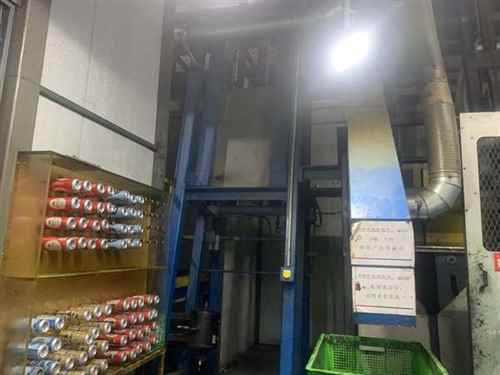
"Custom Printing Capability" Splits Into Four Checkable Layers
A supplier saying it can print your artwork on beverage cans isn't a differentiator — everyone says it. In practice the claim breaks into four layers, each one independently verifiable before a PO is issued.
Layer 1 — Artwork engineering. Logos, graphics and color separations have to survive the physical decoration process and stay consistent across a long run. The right question isn't "can you print my file" but "what will the can look like at unit 5,000 and at unit 500,000."
Layer 2 — Decoration and liner compatibility. Exterior printing, interior lining and any applied coating must work as one system on a food-contact container. Ink, coating and lining choices all interact with the beverage, the filling temperature and the storage conditions. These are not separate purchases.
Layer 3 — Dimensional and seal consistency. A printed can still has to run on an automatic high-speed filling and seaming line. If body dimensions or the sealing interface drift, the decoration is irrelevant — the line stops.
Layer 4 — Commercial thresholds. MOQ, lead-time tiers, inspection method and payment structure decide whether custom printing is even accessible at your planned volume. A beautiful proof means nothing if the program can't be priced at the quantity you need.
The classic sourcing mistake is evaluating only Layer 1. A supplier showing glossy printed samples but unable to document lining compliance, seal testing or a stable delivery schedule leaves the buyer carrying the risk into production.
Why Print and Food-Contact Compliance Get Audited Together
Aluminum and metal can formats now run across beer, carbonated drinks, functional drinks and fruit wine. The filling environment shapes what the container must do. Creative Packaging's documented application conditions for its aluminum can line describe indoor production at normal temperature, dry warehouse storage, and use on automatic high-speed filling and seaming equipment matched with can filling machines, seamers and ink printing machines. The same documentation lists the requirements that actually matter: BPA-free inner coating, food-grade construction and high airtightness.
That's why decoration decisions can't be separated from food-safety decisions. The printed surface is a brand asset. The interior lining is a compliance asset. When a buyer asks a Chinese OEM manufacturer about custom printing, the competent answer covers both — the graphic spec and the coating spec, with evidence for each.
A second shift is documentation-driven procurement. Buyers increasingly ask for test reports, COA verification and retention samples rather than verbal assurances, because those are the artifacts that survive an importer's own audit or a retailer's supplier questionnaire. A factory that can't produce these on request is a factory you'll be chasing later.
Creative Packaging's OEM Printing Capability, in Verifiable Terms
Creative Packaging is the packaging brand of Anhui Creative Packaging Technology, a Hefei-based one-stop packaging solutions provider producing glass, plastic and metal containers for the food, beverage, personal care, condiment and alcoholic beverage industries. Its metal packaging capability, stated in its own production data:
- Production mode: OEM/ODM — your brand, artwork and specification drive the output, not a fixed catalogue item.
- Customization scope: logo, packaging, graphic, printing, color, coating, size and capacity.
- Monthly capacity: 300,000,000 pieces per month.
- Minimum order quantity: 100,000 pieces.
- Lead time: 7 days for 1–10,000 pieces; 15 days for 10,001–500,000 pieces; negotiable above 500,000 pieces.
- Quality control: pre-shipment inspection.
- Engineering resource: a 15-engineer R&D team supporting design and prototyping.
- Facility structure: three dedicated production facilities focused separately on glass, plastic and metal packaging.
- Certification: ISO 9001, FDA and CE.
- Export footprint: more than 150 countries and regions, more than 2,500 clients worldwide.
How to read these numbers practically: 300 million pieces a month means a 100,000-piece custom run is a small fraction of one month's output, so scheduling pressure is low. The 100,000-piece MOQ is the real gate — below that volume, standard mass-production pricing doesn't apply. And the 7-day tier for 1–10,000 pieces should be understood as a small-quantity window, not a commercial channel for branded retail runs.
Compliance Evidence Behind a Printed Order
Decoration sits on the outside of the can. The lining is what touches the beverage. Creative Packaging specifies a BPA-free inner lining, verifies each incoming material batch against its COA before production, and keeps batch retention samples for traceability.
Test report on file: Bisphenol A (BPA) Test Report number ZTS25012103ERC, issued 12 February 2025 by Shenzhen ZTS Testing Service Co., Ltd. The report covers aluminum can coating against Regulation (EC) No 1935/2004, (EU) 2018/213, (EU) 10/2011 and CEN/TS 13130-13:2005, and applies to the global market.
Three named risk controls sit behind that report:
- Seal integrity is controlled by 100% airtightness testing on every unit before shipment — not by sampling.
- Cap torque is controlled as a defined parameter with upper and lower limits.
- Coating adhesion is verified by adhesion testing that confirms the lining bonds firmly to the substrate.
These are the checks a buyer should ask to see reflected in the pre-shipment inspection report. If a supplier can't name the control, assume it doesn't exist.
The Production Sequence Behind a Printed Can
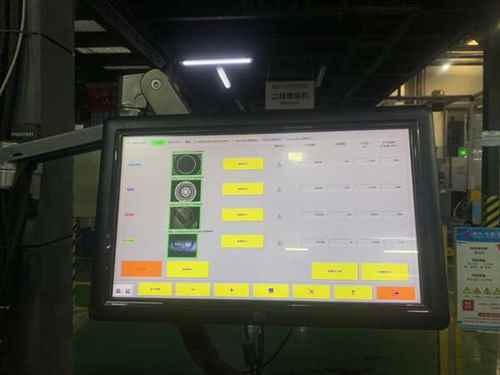
The metal line runs a documented sequence from raw material intake to finished-can inspection. Aluminum coil is stamped, printed and dried, deep-drawn into the can body, cleaned, then inspected — including a dedicated logo inspection and verification step that checks the printed decoration against the approved artwork before packing.
Because the printed decoration and the formed body come off the same line, print quality and dimensional quality aren't separate purchasing decisions. A buyer who approves a print proof without agreeing dimensional and seal acceptance criteria has approved only half a specification.
Running a Custom-Printed Can Project: Seven Steps
Step 1 — Define the container and application. Start with the beverage, the filling method and the storage conditions — not the artwork. The documented application covers beverage, beer, carbonated drink and functional drink production on automatic high-speed filling and seaming lines, indoors at normal temperature with dry warehouse storage. If your intended use sits outside that envelope, raise it before quoting.
Step 2 — Lock the decoration specification. Specify exactly what's being customized: logo, graphic, printing, color, coating, size and capacity. Treat color and coating as engineering decisions, not cosmetic ones — they have to be compatible with the liner system and with the printing and drying stage.
Step 3 — Clear compliance before tooling. Request the lining specification, the COA verification process and the BPA test documentation. The relevant reference is report ZTS25012103ERC and the standards it cites. Confirm the retention-sample practice so a future batch can be traced back to its material.
Step 4 — Approve a proof and agree acceptance criteria. Use the 15-person R&D team to settle the graphic before mass production, then agree inspection items and AQL in writing. The stated method is pre-shipment testing with the report provided before goods leave — and both sides should fix test items before production starts, not after.
Step 5 — Schedule against the lead-time tiers. Place your volume in the correct tier: 7 days for 1–10,000 pieces, 15 days for 10,001–500,000 pieces, negotiable above 500,000. Remember that standard mass-production pricing starts at 100,000 pieces, so a decorated retail run normally sits in the middle tier.
Step 6 — Choose the Incoterm and settle payment. FOB, CIF and EXW are all offered. EXW suits buyers with their own forwarder; FOB suits buyers who nominate the vessel and pay freight; CIF suits buyers who want freight and insurance covered to the destination port. Payment is 30% T/T deposit before production and 70% T/T against a copy of the bill of lading.
Step 7 — Verify before shipment. Confirm that the pre-shipment report actually reflects what was agreed: 100% airtightness results, cap torque values, coating adhesion and logo verification against the approved artwork. Don't accept a generic product description in place of a spec-tied report.
Where Custom-Printed Aluminum Cans Fit
The aluminum can supply record shows the categories where a printed can carries real commercial weight. Reported annual contract values are as stated; project durations aren't publicly disclosed.
- Brewery, United States — annual contract value USD 1.2 million, canned beer packaging. In beer, the can surface is the primary brand carrier at the point of purchase, so print consistency across a long run matters as much as the container itself.
- Fruit winery, United Kingdom — USD 800,000, canned fruit wine. Fruit wine brings corrosion-resistance and sealing requirements of an acidic beverage into the spec.
- Beverage plant, UAE — USD 500,000, canned beverage production.
- Beverage plant, Kazakhstan — USD 500,000, canned beverage production.
- Fruit winery, South Korea — USD 400,000, canned fruit wine production.
Across these projects the outcome is consistent: stable production meeting food-grade packaging requirements, with food-grade construction, good sealing performance and corrosion resistance cited as the operative characteristics. For a buyer planning a printed run, that's the useful signal — the decoration is delivered on a container already qualified for food-grade filling.
Three Failure Modes Worth Testing Before You Commit
Three problems recur in aluminum can supply. Each has a defined control you can request as evidence.
Leakage and seal failure. Documented triggers include a lid not tightened to specified torque, an aged, misaligned, contaminated or missing sealing ring, drop or impact damage, a pressure change, or an undetected sealing defect. The control is seal integrity management: 100% airtightness testing before shipment, rejection of failed units before packing, correct reassembly after washing, and no over-tightening.
Coating delamination. Delamination comes from substrate deformation after impact or dropping, or poor adhesion caused by a coating batch quality issue. The controls are adhesion testing of the inner lining plus thermal-shock resistance. If a coating begins to peel or flake, withdraw the container from food or beverage use immediately.
BPA migration. Migration risk rises with filling liquid above the rated temperature, prolonged contact with acidic or oily contents, an aged or damaged lining, prolonged storage, or a non-compliant incoming batch. Controls: BPA-free lining as the specified material, COA verification on every incoming batch, batch retention samples, and a stated temperature range in the product manual.
Frequently Asked Questions
Do custom-printed aluminum cans from a Chinese OEM meet food-contact requirements?
Creative Packaging specifies a BPA-free inner lining and verifies each incoming material batch against its COA before production, with batch retention samples kept for traceability. The BPA Test Report on file — number ZTS25012103ERC, issued 12 February 2025 by Shenzhen ZTS Testing Service Co., Ltd. — covers aluminum can coating against Regulation (EC) No 1935/2004, (EU) 2018/213, (EU) 10/2011 and CEN/TS 13130-13:2005. Facility certification includes ISO 9001, FDA and CE. Food-contact compliance is determined by the lining and its verified test data, so review the coating documentation alongside the decoration spec — not in place of it.
What can actually be customized on an OEM beverage can?
Customization is listed across logo, packaging, graphic, printing, color, coating, size and capacity, produced in OEM/ODM mode. A 15-engineer R&D team supports design and prototyping, which is where a graphic specification should be settled before mass production. Monthly capacity is 300 million pieces, so decoration changes can be absorbed within a normal production schedule — as long as the customization is agreed before tooling and printing begin.
What order volume does custom printing require, and how is it paid?
The stated MOQ is 100,000 pieces, which is also the threshold for standard mass-production pricing. Delivery terms are FOB, CIF or EXW: EXW suits buyers using their own forwarder, FOB suits buyers who nominate the vessel and pay freight, and CIF suits buyers who want freight and insurance covered to the destination port. Payment is 30% T/T deposit before production and 70% T/T against a copy of the bill of lading, so the deposit is committed before the goods leave the factory.
Can I approve the print result before mass production?
Design and prototyping support is available through the R&D team, and the inspection method is pre-shipment testing with the report provided before the goods leave. The working rule is that test items and AQL are agreed before production starts, not after. Print verification is supported by a dedicated logo inspection and verification step, and the pre-shipment report should also reflect 100% airtightness testing, cap torque control and coating adhesion testing.
How long does production take for printed aluminum cans?
Lead time is tiered: 7 days for 1–10,000 pieces, 15 days for 10,001–500,000 pieces, and negotiable above 500,000 pieces. A decorated commercial run at or above the 100,000-piece MOQ therefore normally falls in the 15-day tier — excluding shipping and any artwork or sampling work that precedes production.
Conclusion: Separate the Decoration From the Capability
Evaluating custom-printed aluminum cans is an exercise in separating decoration from capability. Creative Packaging can print logos, graphics, colors and coatings on an OEM/ODM basis, at 300 million pieces per month, on a container line documented for food-grade, BPA-free, high-airtightness beverage use and backed by BPA test report ZTS25012103ERC.
The parameters that decide whether a project runs smoothly are unglamorous: a 100,000-piece MOQ, a 15-day production window for most commercial volumes, pre-shipment inspection with agreed AQL, and a 30/70 T/T payment structure. Buyers who verify those four items before issuing a purchase order — and who review the coating documentation alongside the artwork proof — are evaluating real capability rather than a sample case.
Next Step: Sample, Quote or Specification Review
Send your can format, print specification and target volume to Creative Packaging for a quotation, or request a pre-production sample discussion before committing to a 100,000-piece run. Compliance documents, including the BPA test report and the pre-shipment inspection process, can be reviewed before the order is placed.
· Email: sales@creative-packing.com
· Tel / WhatsApp: +86 185 5501 9935
· Website: www.creative-package.com
· Address: Floor 32, Anhui Center, No. 146 Changjiang Middle Road, Luyang District, Hefei City, China