Custom Food Jar OEM and ODM: A Practical Sourcing Guide for Buyers
A food jar sourcing project only becomes real when four questions have written answers: which jar format and closure the factory can actually produce, which customization options it genuinely controls, how it proves food-contact compliance for your destination market, and what MOQ, lead time and payment terms it will commit to in a contract. Everything else in a sourcing discussion circles back to those four.
Creative Package is a glass packaging manufacturer based in Hefei, Anhui Province, China. We run OEM and ODM production for glass food jars, with a customization set covering logo, packaging, graphic, color, surface handling, cap, size, mold and printing. This guide is written for buyers who have already settled on glass as the right material and now need to figure out whether a specific supplier can match a specific jar brief.

Why Food Jar Projects Stall Between Evaluation and Execution
Most custom food jar projects do not fall apart on price. They stall because the brief reaches the factory in a shape the factory cannot quote against — and the buyer only finds this out after several rounds of offers that cannot be compared with each other.
We see three repeating patterns on our factory floor:
The format drifts. "Food jar" is a family word, not a specification. A honey jar, a jam jar, a spice jar, a candy jar, a coffee jar, a candle glass jar and a one-liter preserving jar are entirely different projects. They use different closures, different decoration density and different compliance paths. A factory that is sharp on a small honey jar may not be the right partner for a large storage jar with a decorated lid. Buyers who do not lock the format and closure at the start end up comparing quotes that have nothing in common.
Decoration is assumed instead of specified. Logo, color, surface handling, printing and graphic artwork are separate decisions. Each one has to be fixed before a jar can be costed, not after. A quote built around a printed logo will not line up with a quote for a plain jar with a plain closure — and the price gap can be significant.
Compliance evidence shows up late. In the EU, there is no single harmonized standard for glass as a food-contact material. Compliance rests on a framework safety duty, documented good manufacturing practice, and national provisions of the destination country. That is a paper trail, not one certificate. Buyers who ask for the trail at purchase-order stage often find gaps that delay their launch.
The gap between evaluation and execution is a specification gap and a documentation gap. The sections below close it with the parameters a factory can actually commit to.
What the 2026 Rulebook Looks Like for Glass Food Jars
Glass jars used for packing goods are classified under HS heading 7010, which covers carboys, bottles, flasks, jars, pots and other glass containers — and explicitly includes preserving jars of glass. Food and packing glass containers fall specifically under HS 7010.90. This matters commercially because it is the line buyers and forwarders should use when checking duty treatment and comparing sourcing countries.
The food-contact layer. In the EU, Regulation (EC) No 1935/2004 sets the baseline: food-contact materials like glass jars and their closures must not transfer constituents to food in quantities that could endanger health, change the composition of the food unacceptably, or deteriorate its taste and smell. Commission Regulation (EC) No 2023/2006 then requires manufacturers to run a documented good manufacturing practice and quality assurance system. Because the EU has not issued a glass-specific harmonized measure, buyers should expect compliance to be shown through the framework requirement, GMP documentation and the national provisions of the destination member state. Decorated ware adds another layer: in the United States, resinous and polymeric coatings used as food-contact surfaces — including coatings on glass containers and closures — fall under 21 CFR 175.300. China applies its own national standard, GB 4806.5-2016, to glass products in contact with food.
The sustainability layer. Regulation (EU) 2025/40 on packaging and packaging waste introduces EU-wide sustainability obligations, including design-for-recycling requirements and material-specific recycling targets that glass packaging must meet to stay on the EU market. For a jar specification, that turns wall thickness and jar weight into a compliance variable as well as a cost variable — not just something to negotiate down on price.
The product-standard layer. Two EU product standards shape jar choice in the two highest-volume food jar families. Council Directive 2001/110/EC sets compositional requirements and reserved names for honey. Council Directive 2001/113/EC does the same for fruit jams, jellies and marmalades. Both constrain fill weight, headspace and labeling — which in turn constrains jar capacity and closure selection.
Creative Package Food Jar Capability, in Decision Inputs
A capability that cannot be written into a specification or a purchase order is not yet a capability the buyer owns. Here is what we can actually commit to.
OEM and ODM: Both Available
OEM is the right route when the jar is part of your brand identity and the shape, closure and decoration must be controlled by you. ODM is the right route when speed and landed cost matter more than uniqueness, and an existing format can carry the product. Picking the wrong route is one of the most common reasons a project quotes well and then stalls.
The Nine Customization Levers
Customization at Creative Package covers nine areas, and each settles a different buyer decision. They should be selected in a fixed order rather than bundled together:
- Size — Fill volume and the shelf or foodservice format the jar has to fit
- Mold — Whether the body is a new shape or an existing format; custom mold development is supported
- Cap — Which closure system is used and how it presents on shelf
- Logo — How the brand mark is carried on the jar or the closure
- Color — Glass color or applied color across the range
- Surface handling — The tactile and visual finish of the body
- Printing — Applied graphics on the body
- Graphic — The artwork system that has to stay consistent across sizes
- Packaging — Shipper and retail carton, which governs breakage exposure and shelf presentation
Capacity, MOQ and Lead Time
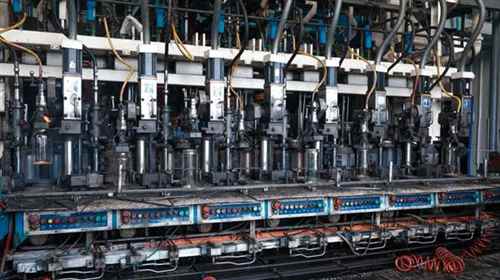
Our glass jar lines run at a monthly capacity of 500,000 pieces. The minimum order quantity for standard mass-production pricing is 5,000 pieces. Lead time is banded by volume rather than quoted as a single number — which is the honest way to read it:
- 5,000–10,000 pieces: 7 days
- 10,000–50,000 pieces: 20 days
- Above 50,000 pieces: Negotiable per order
We offer FOB, CIF and EXW as Incoterms. Payment follows a standard structure: 30% T/T deposit before production, 70% T/T against copy of B/L. Pre-shipment inspection is included, and after-sales support is provided remotely.
Conformity and Quality Evidence
Creative Package facilities are ISO 9001 certified, and our products have passed FDA and CE requirements. Beyond the certificates, we run a control set that a buyer can test against their own risk register:
- Seal integrity: Every unit passes a 100% airtightness test before shipment, supported by cap torque control with defined upper and lower limits and periodic equipment calibration.
- Thermal stability: A Thermal Shock Test defines the tolerable temperature differential, and the resulting limits can be written into filling instructions.
- Transit protection: Dividers and foam lining separate each unit so items do not collide. Drop testing is completed before shipment to verify the packaging holds up under handling and parcel sorting.
- Heavy metals: Glaze, coating, ink and any metal parts in food contact are sourced to food-grade requirements. Raw materials and finished products are tested by FDA and SGS for lead, cadmium and other heavy metals.
- Batch analysis: Certificate of Analysis ZTS2510311ZZRC, issued on 5 November 2025 by Shenzhen ZTS Testing Service Co., Ltd., covers glass jar model IDG102 against EPA 3052, ASTM D3421, EN 14372, EN 14350 and EPA 3540C/3550C.
Where the Capability Stops
Stating limits is part of a credible capability brief. The 500,000 pieces per month is line capacity for glass jars, not a reservation for a single SKU. Volumes above 50,000 pieces are quoted case by case. Because the EU has no harmonized glass-specific measure, destination-market documentation has to be confirmed market by market — not assumed from an EU-level certificate. Surface handling and decoration should be approved on a physical sample, since frosted, sprayed and printed surfaces are judged visually and by handling. And after-sales support is remote, so a buyer who needs on-site engineering during commissioning should plan for that separately.
Seven Steps From Food Jar Brief to Shipped Order
A custom food jar order runs through a predictable sequence. The value is that each step produces a document, and the document is what makes the next step enforceable.
- Define the jar family and the end use. Fix the fill volume, the product to be packed and the closure type. Output: a one-page specification. Skipping this is what produces offers that cannot be compared.
- Scope compliance by destination market. Map the EU framework and GMP obligations, the coated-ware rules that apply in the US, and the national standard for the destination. Output: a documentation list. Skipping this moves compliance risk to purchase-order stage.
- Select customization levers. Work through the nine levers listed above in order. Output: a costed configuration. Skipping this produces a quote that silently assumes defaults.
- Develop or confirm the mold and prototype. Our integrated service covers material development and 3D prototyping through to mass production. Output: an approved shape. Skipping this means discovering dimensional issues in the first production run.
- Fix acceptance criteria in writing. Agree the AQL and the test items before production starts. Output: an inspection plan. Skipping this turns the pre-shipment test into a negotiation instead of a check.
- Produce and inspect. Mass production runs at line capacity, and goods are inspected before they leave, with the test report provided. Output: inspection report and Certificate of Analysis.
- Ship and settle. Goods move under FOB, CIF or EXW, and the balance falls due against a copy of the bill of lading. Output: shipping documents that close the file.
Where Food Jar Capability Is Actually Tested
Different jar families load the capability set differently. Buyers should expect the specification conversation to shift accordingly:
- Honey jar — Fill weight and labeling consistent with the EU honey standard
- Jam jar — Reserved name and composition under the EU jam standard
- Spice jar — Closure sealing against moisture pickup
- Coffee jar — Aroma retention and closure choice
- Candy jar, cookie jar — Opening size measured against product size
- Candle glass jar — Heat behavior of the jar treated as a safety variable, not just an aesthetic one
- Mini glass jar — Decoration cost per unit, which rises as volume falls
- Large glass jar — Handling weight and carton strength
- Milk jar, juice jar — Closure performance rather than the body itself
Round jar formats and glass mason jar formats concentrate most of the food and preserve volume. That is why glass jar with lid specification is usually where the real negotiation happens: the body is often the easy part, and the lid carries the performance risk.
Evidence From Operating Programs
Three disclosed customer programs show how the capability set works in practice. A coffee processing plant in Australia runs an annual contract value of USD 1.8 million for coffee packaging material. A food processing plant packing pickled products runs USD 1.6 million annually. A second coffee processing plant, operating globally, runs USD 2 million. In all three, the reported result is the same: stable production that meets food-grade packaging requirements, with food-grade compliance, seal performance and resistance to the packed product cited as the deciding attributes.
Quality Control on the Line
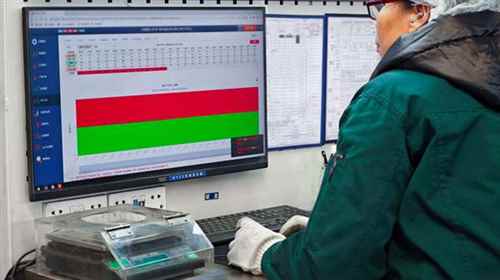
Inspection happens twice in a well-run order: on the line where the jar is formed and decorated, and again before shipment. The pre-shipment inspection is the one the buyer sees, because it produces the report that serves as the acceptance document. The line-level inspection catches defects early — before they propagate across a full production run — while the pre-shipment stage confirms the finished goods meet the agreed AQL before they leave the factory gate.
Frequently Asked Questions
Can a Chinese mason jar OEM manufacturer supply a jar with custom lid tooling?
Custom lid tooling is a closure and mold question, and both are customization levers at Creative Package. Mason-style jars are declared under HS heading 7010, which explicitly includes preserving jars of glass. In practice, the closure specification has to be fixed against the jar before tooling is committed, because cap fit, liner material and the coated finish on the closure all affect seal performance. Brief the cap and the body together — do not treat the lid as an accessory selected later.
What should I include in an RFQ to get an accurate quote?
The most useful RFQ states the product to be packed, the target fill volume, the preferred closure type, the decoration requirements, the destination market and the estimated order quantity. Buyers evaluating a custom mold or a custom lid should also include the intended artwork and finish at first contact. A vague inquiry like "glass jar 500ml" produces a vague quote; a specific brief produces a configuration and a price the buyer can act on.
How does Creative Package handle a first-time trial order?
For a first trial, we recommend starting with a sample in the target specification — correct size, closure and decoration — so the buyer can test it against their own product and filling process before committing to the 5,000-piece MOQ. Once the sample is approved, the order enters the standard production sequence with the agreed AQL and inspection plan. This avoids the common trap of approving a jar from a photo and then discovering dimensional or seal issues during the first production run.
Conclusion
The fastest way to test a supplier is to send a brief with a volume, a destination market and a closure decision attached. That turns a capability conversation into a quotable order.
Next Step: Sample and Quotation
Send your jar family, target fill volume, closure preference, decoration requirements and order volume, and Creative Package will respond with a configuration and a quotation.
- Website: www.creative-package.com
- Address: Hefei, Anhui Province, China