FOB vs CIF vs EXW on Glass Jar Orders: Which Term Fits Your Order?
Most Incoterm conversations on a glass jar order begin with the price and end with the price. What buyers notice a month later is different: which invoice shows up at the destination port, who is chasing the forwarder when a container gets rolled, and who files the claim when a pallet comes off the vessel with broken jars. The three-letter code does not change the jar, the lid, the AQL or the test report. It decides those three things, and on glass they tend to cost more than the freight itself.

Three things change, and only three
Who pays the main carriage. Where risk passes from seller to buyer. Who holds the bill of lading.
The third one is the easy one to skip, and it is the one that goes wrong on glass jar orders, because balance payment is normally released against a copy of the B/L. Change the term, and you can change who is able to produce that document at all.
Why glass needs its own conversation
Glass jars and preserving jars sit under HS heading 7010, the classification for glass containers used to convey or pack goods. That detail matters more than it looks: it confirms this is declared, duty-assessed cargo rather than a parcel, so export clearance is a real step and someone has to own it.
The second factor is weight against value. Glass is dense and less forgiving in handling than PET, which is why packing specifications on jar orders are tighter than on bottle orders. Freight cost and handling risk are both material, and both get reassigned the moment you change term. That is the whole argument.
The 30/70 problem nobody checks until it stalls
Production orders in this category usually run 30% T/T deposit before production and 70% T/T against a copy of the bill of lading. The structure is commercial and separate from the Incoterm, but the Incoterm decides whether it can be executed as written.
On FOB and CIF the supplier books the space, appears as shipper, and can present the copy the day the vessel sails. On EXW the booking is yours, the B/L is issued to your forwarder, and the supplier may never hold the document it is supposed to present for the balance. EXW is not unusable because of this, but the 70% trigger has to be rewritten before the contract is signed, against a warehouse receipt, a signed loading confirmation or the export declaration.
EXW: the quote looks small because the work moved to you
Under EXW the goods are placed at your disposal at the factory. Export clearance, main carriage, insurance and import clearance are yours. Risk passes at the factory gate, before the jars have travelled a kilometre.
Two practical points that come up on almost every EXW jar order. Export declaration needs a Chinese exporter of record: fine if you buy from a factory holding its own export licence, worth asking about if the seller is a trading company. And under Incoterms 2020 the EXW seller is not obliged to load the vehicle. On a few pallets that is a minor inconvenience; on a full container it is a crane, a queue and a charge.
If what you actually want is control of the ocean leg without running Chinese export formalities, FCA does that job better. The seller clears export and hands over at the terminal, and you still nominate the carrier. A fair number of buyers who ask for EXW are really describing FCA.
The commercial trap with EXW is arithmetic. The unit price is lowest because everything else is billed separately, at rates you cannot negotiate. On a single order of a few thousand jars, one export declaration and one consolidation charge can eat the difference.
FOB: supplier responsibility ends on board
The supplier packs, hauls to port, clears export and loads. Risk passes once the goods are on board at the named port of shipment. You nominate the vessel and forwarder, you arrange cover, you pay the ocean freight.
For glass this is the useful split, because most breakage happens in the factory-side chain: carton make-up, pallet stacking, the inland haul, the lift onto the vessel. FOB leaves that with the party that can actually control it, and leaves freight and insurance with you.
One thing to verify rather than assume: a supplier quoting FOB may still book the container itself and appear as shipper on the B/L. Functionally that is CFR with a different label, and it removes the freight visibility you thought you had bought. If freight control matters, name your forwarder in the PO and check the shipper field on the draft B/L before cut-off.
CIF: a delivered price, not delivered risk
Cost, insurance and freight to the named destination port. Note what did not move: risk still passes when the goods are on board at the port of shipment. A jar broken between Shanghai and Hamburg is yours to claim, even though the supplier placed the insurance.
The cover level is where CIF quotes quietly differ. The default obligation is minimum cover, which usually means Institute Cargo Clauses (C): total loss and major casualties, not the rough handling and breakage a glass buyer has in mind. Ask for Clause (A) or a stated breakage extension and price the difference before you compare the two numbers.
Destination charges under CIF are also yours. Terminal handling, unloading, import clearance, and demurrage if the documentation is slow all sit on your side of the table.
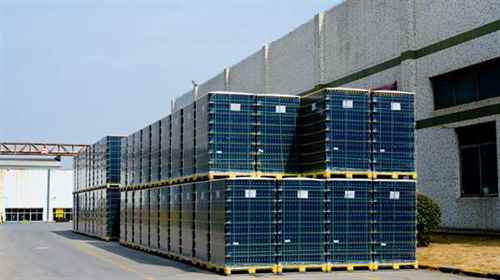
EXW, FOB and CIF side by side
| Decision point | EXW | FOB | CIF |
|---|---|---|---|
| Risk passes at | Supplier's premises | On board, origin port | On board, origin port |
| Main freight paid by | Buyer | Buyer | Seller |
| Insurance arranged by | Buyer | Buyer | Seller, at minimum cover |
| Export clearance | Buyer | Seller | Seller |
| B/L issued to | Buyer's forwarder | Seller | Seller |
| 70% against B/L copy | Needs a new trigger | Runs as written | Runs as written |
| Seller's responsibility for factory-side handling | Ends at the gate, loading not obligatory | Through loading | Through loading |
| Carrier and routing control | Full | Full | Limited |
| Where it fits | Consolidation, buyers with China logistics | First trial, freight visibility | Repeat volume, budget-first |
Which term for which order
A first trial is a validation order. Its job is to prove the jar, lid, decoration and packing survive a real supply chain, not to shave dollars off freight. FOB is the defensible choice here: the supplier owns the riskiest handling stage, you see what ocean freight actually costs on your lane, and the balance trigger runs without amendment. FOB also gives you a freight baseline to argue from next year.
Once the specification, packing configuration and inspection scope are stable, freight stops being a discovery and becomes a line item. At that point CIF is genuinely convenient, one price to the port, one supplier, one less relationship to manage. Buyers with volume enough to hold their own carrier contract usually stay on FOB, because that is where the freight saving lives.
Sourcing jars, lids and secondary packaging from several Chinese suppliers is the case where EXW earns its place, or FCA if you would rather not carry export clearance. One forwarder consolidating at origin can save more than supplier-side loading costs, provided you have the export capability and the insurance scope to carry it.
What to write into the contract
- The named port or place, spelled exactly as it appears on the B/L.
- Insurance clause and cover level, whenever you are not the one arranging it.
- Who is named as shipper on the B/L.
- The document set: test report, packing list, B/L copy, and the precise event that releases the balance.
- Breakage handling: photographs taken at unstuffing, before the pallet is broken down, and how replacements are supplied. We replace jars broken in transit free of charge, but the claim still depends on that photographic record.
Decide the term before the price
The usual mistake is choosing the term last, after the unit price is agreed. By then the quotation is anchored on one basis, and switching changes the cost structure without changing the number on the page. Settle the term while volume and payment structure are still open, and the rest of the negotiation gets easier.
Creative Package runs its own glass, plastic and metal plants in Hefei and quotes glass jars, mason jars, honey and jam jars, spice jars, candle jars and storage jars on FOB, CIF or EXW. Minimum order depends on the jar and on decoration: stock jars can start from a single carton, custom-logo food jars typically sit at 5,000 pcs, and some formats run from 2,000 to 10,000. Send your capacity, decoration and destination port through the contact form at creative-package.com/contact-us and you will get a term-by-term comparison, usually within 24 hours.