PET Preform Sourcing Guide: 28mm Specs and Food-Contact Compliance
A PET preform may look like a simple plastic component, but it determines many of the key properties of the finished bottle. The neck finish affects cap compatibility, the preform weight affects bottle wall thickness, and the resin determines whether the final packaging is suitable for food-contact applications.
For buyers sourcing 28mm PET preforms, these details should be confirmed before moving from samples to mass production.
This guide covers the main points to check when sourcing food grade PET preforms, including neck dimensions, material, weight, food-contact documentation, customization, quality control and supply conditions.
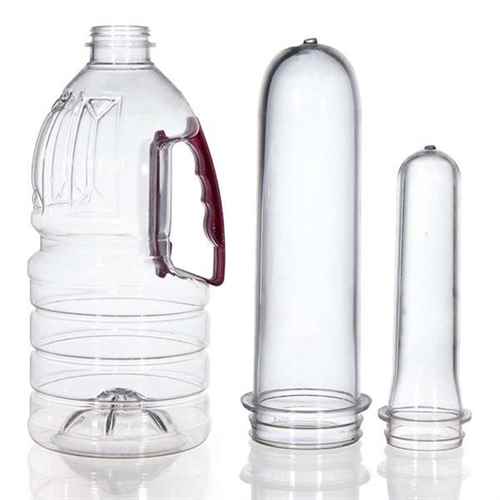
What to Check Before Ordering 28mm PET Preforms
There are three areas that usually require the most attention during PET preform sourcing.
1. Neck Finish and Cap Compatibility
The 28mm neck finish is widely used for water bottles, beverages, edible oil and other PET packaging applications. However, a 28mm specification alone does not guarantee that the preform will work with a particular cap.
The neck finish needs to match the closure in terms of dimensions, thread design and fit.
Before bulk production, buyers should confirm:
- Neck finish dimensions
- Thread specifications
- Cap compatibility
- Neck weight and finish consistency
- Cap fit and sealing performance
PET preforms and caps are best evaluated together, especially when a project uses a customized closure.
2. PET Resin and Food-Contact Requirements
For food and beverage packaging, “food grade PET” should be supported by documentation.
A supplier should be able to provide information about the resin used and the applicable food-contact testing. Depending on the destination market, buyers may need documentation covering requirements such as EU food-contact regulations or relevant national standards.
For a supplier evaluation, ask for:
- PET resin information
- Food-contact test reports
- Applicable regulations and standards
- Testing laboratory
- Report number and issue date
- Product or model covered by the report
This makes it easier for purchasing and quality teams to keep the supplier documentation complete.
3. Preform Weight Consistency
Preform weight has a direct effect on the finished PET bottle.
If the weight is too low, the bottle may have insufficient wall thickness after blow molding. Excessive weight, on the other hand, increases resin consumption without necessarily improving bottle performance.
For this reason, weight control should be part of routine production inspection. Automatic checkweighing and regular dimensional checks can help identify out-of-specification preforms before they reach the blowing process.
28mm PET Preform Specification Checklist
A useful PET preform specification should be clear enough to compare a sample with the approved drawing and production requirements.
| Specification | What to Confirm |
|---|---|
| Material | Food-grade PET resin |
| Neck Size | 28mm or customized neck finish |
| Colour | Natural clear or customized colour |
| Weight | Confirmed preform weight and tolerance |
| Cap Compatibility | PET, PP or aluminum closures according to design |
| Application | Water, beverage, edible oil, condiment and other suitable applications |
| Customization | Weight, neck finish, colour, mould and packaging |
| Samples | Available for testing before mass production |
| Quality Control | Dimensional inspection, weight control and pre-shipment inspection |
The 28mm PET preform is only one option. Depending on the bottle design, other neck sizes such as 20mm, 24mm, 30mm and 32mm may also be used.
For projects using a proprietary bottle or closure, a customized neck finish can be developed according to the required dimensions.
Food-Contact Compliance for PET Preforms
Food-contact compliance should be considered at the preform stage rather than after the bottle has already been produced.
For example, PET preforms used for drinking water, juice, edible oil and condiment packaging may need to meet different regulatory requirements depending on the destination market and filling conditions.
Relevant documentation may include testing for:
- Overall migration
- Specific migration
- Heavy metals
- Antimony
- Primary aromatic amines
- Residual substances
- Sensory properties
- Decolorization
For European markets, buyers may request documentation related to Regulation (EC) No 1935/2004 and Commission Regulation (EU) No 10/2011. For the Chinese market, relevant requirements may include GB 4806.7 and associated testing standards.
The exact compliance requirements should always be confirmed according to the destination country, product type and intended filling conditions.
Virgin PET or rPET?
Material selection is becoming another important part of PET preform sourcing.
Virgin PET remains widely used for food and beverage packaging because of its established processing and food-contact properties. At the same time, more brands are introducing recycled PET (rPET) into their packaging programs to meet sustainability targets and regulatory requirements.
If a project requires recycled content, buyers should confirm:
- rPET availability
- Recycled content percentage
- Source and traceability of recycled resin
- Food-contact suitability
- Required certification
- Availability for continuous production
Do not assume that a food-contact test report automatically confirms recycled content. These are separate aspects of the specification and should be documented separately.
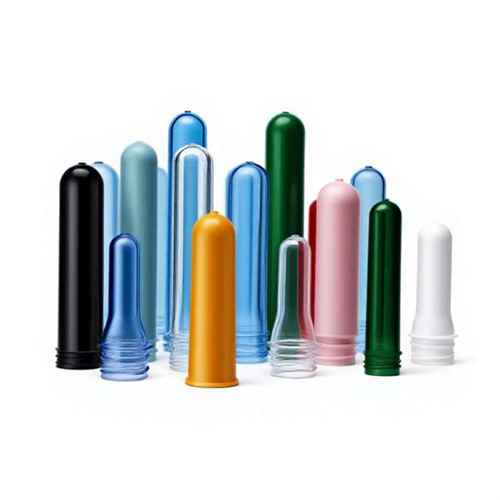
Applications of 28mm PET Preforms
28mm PET preforms are commonly used for blow-moulded bottles across several packaging categories.
Drinking Water
Water bottle preforms require stable neck dimensions, consistent weight and reliable blow-moulding performance. Clear food-grade PET is commonly used for transparent bottled water packaging.
Beverages
PET preforms can be used for juice, soft drinks and other beverage applications. The preform design should be matched with the bottle shape, filling process and closure.
Edible Oil
Oil PET preforms are designed for bottles used for cooking oil and related food products. Bottle weight, neck finish and chemical compatibility should be checked according to the filling application.
Condiments
PET bottles for sauces, dressings and other liquid condiments may require different bottle shapes and neck designs. A suitable preform can be developed around the finished bottle and closure requirements.
Personal Care and Daily Chemical Packaging
PET is also widely used for personal care and daily chemical bottles. For these applications, the focus may shift from food-contact compliance to chemical compatibility, appearance and bottle performance.
Custom PET Preform Development
Not every bottle project can use an off-the-shelf preform.
Custom development may be required when a buyer needs a specific:
- Neck finish
- Preform weight
- Bottle capacity
- Bottle shape
- Colour
- Resin specification
- Closure
- Mould
A typical development process includes:
Bottle Design → Preform Design → Mould Development → Injection Moulding → Sample Testing → Blow Trial → Quality Approval → Mass Production
Testing the preform on the customer's actual bottle mould is particularly important. A preform that performs well in one bottle design may require adjustments when the bottle geometry, weight distribution or blowing conditions change.
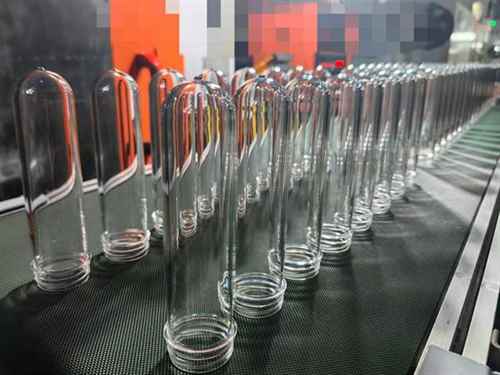
How to Evaluate a PET Preform Supplier
Price is important, but it should not be the first and only comparison point.
Before placing a bulk order, buyers should confirm the following:
1. Product Specification
Confirm the neck finish, weight, material, colour, dimensions and intended application.
2. Food-Contact Documentation
Request the applicable test reports and confirm that the tested product or material corresponds to the preform being purchased.
3. Sample Testing
Check the sample for:
- Neck dimensions
- Cap fit
- Weight consistency
- Appearance
- Blow-moulding performance
4. Production Capacity
Ask about monthly production capacity and whether the supplier can maintain the same specification for repeat orders.
5. Quality Control
Confirm how the supplier controls:
- Preform weight
- Neck dimensions
- Appearance
- Material consistency
- Packing
- Pre-shipment inspection
6. Delivery and Commercial Terms
MOQ, production lead time, packaging, inspection, Incoterms and payment terms should all be agreed before production.
What Buyers Should Confirm Before Mass Production
A practical PET preform purchase checklist can be kept simple:
Product
- 28mm neck finish
- Preform weight
- PET resin
- Colour
- Bottle application
Closure
- Cap type
- Thread compatibility
- Fit and sealing test
Compliance
- Food-contact test reports
- Destination-market requirements
- Resin documentation
- rPET requirements, if applicable
Production
- Mould specification
- Weight tolerance
- Dimensional tolerance
- Quality inspection
- Packaging
Commercial
- MOQ
- Lead time
- Production capacity
- Incoterms
- Payment terms
Having these points confirmed before production helps avoid problems that are much more expensive to correct after the bottle mould and filling line are already in operation.
FAQ
What is a 28mm PET preform used for?
A 28mm PET preform is an intermediate component used to produce PET bottles through blow moulding. It is commonly used for drinking water, beverages, edible oil, condiments and other bottle applications.
What should I check when buying a 28mm PET preform?
The main points are neck finish, preform weight, PET resin, cap compatibility, food-contact documentation, blow-moulding performance and production consistency.
Are 28mm PET preforms available with custom specifications?
Yes. Depending on the supplier and project, buyers can request customized neck dimensions, weight, colour, mould design and packaging.
Can PET preforms be used for edible oil bottles?
Yes. PET preforms are widely used for edible oil packaging. The preform, bottle design and filling conditions should be evaluated together to ensure suitable performance.
Do food-grade PET preforms need compliance documentation?
For food and beverage applications, buyers should request appropriate food-contact documentation for the resin and finished preform. The required standards depend on the destination market and application.
Can I request PET preform samples before placing a bulk order?
Samples are commonly available for evaluation. Ideally, testing should include neck and cap compatibility, preform weight, appearance and a blow trial using the intended bottle mould.
Final Considerations for PET Preform Sourcing
A reliable 28mm PET preform is more than a standard plastic component. The neck finish must work with the closure, the weight must remain consistent during production, and the material must meet the requirements of the intended application and market.
For buyers comparing PET preform suppliers, the most useful approach is to start with a clear specification and then verify samples, compliance documents and production capability.
Whether the project involves water bottle preforms, oil PET preforms, beverage packaging or custom PET preforms, these checks provide a practical starting point for supplier evaluation and mass-production planning.
Creative Packaging Technology provides PET packaging solutions for different bottle applications, including customized preforms and packaging components. Buyers can submit the required neck size, bottle capacity, preform weight, material, colour and target quantity for specification review and quotation.