Glass Jar Manufacturing: Materials, Closures and Quality Considerations
Glass jars are used across food, beverage, cosmetics, home fragrance and household storage, but a successful packaging project depends on more than choosing a suitable shape.
For buyers, the important questions usually come later: Is the glass suitable for the application? Does the closure provide the required seal? Can the jar handle the filling and storage conditions? What customization is available, and how is quality checked before shipment?
Understanding these points early can make glass jar sourcing more efficient and reduce changes after production begins.
1. Start With the Application, Not the Appearance
The same glass jar format can be used for very different products, but the packaging requirements are not always the same.
Food manufacturers may need jars for honey, jam, sauces, pickles, spices or coffee. Cosmetic brands may require jars for creams and balms, while candle makers need containers suitable for wax and fragrance products.
Each application can affect the choice of:
- Glass material
- Jar capacity
- Mouth opening
- Closure and sealing method
- Temperature resistance
- Surface decoration
- Filling and capping process
For this reason, a glass jar should be specified together with the product it will contain and the way it will be filled and used.
2. Glass Material Can Affect the Final Packaging
Soda-lime glass is widely used for general food and storage applications because it offers a practical balance between performance and cost.
Borosilicate glass can be considered when a project requires greater resistance to temperature changes. The choice depends on the actual operating conditions rather than simply selecting the more advanced material.
Glass colour can also be customized for certain projects. Clear glass provides direct product visibility, while coloured glass can support product protection and visual differentiation.
For bulk orders, buyers should confirm the glass material, colour, wall structure and intended application before approving the final specification.
3. The Closure Is Part of the Packaging System
A glass jar and its lid should not be treated as two unrelated products.
The closure affects sealing performance, opening experience and compatibility with the filling process. Depending on the application, common options include:
- Tinplate twist-off lids
- Aluminum lids
- Plastic lids
- Wooden lids
- Snap-on lids
- Airtight clamp-style closures
For food products, the liner or sealing material is also important because it comes into contact with the jar opening and can influence leak resistance.
Cosmetic and personal care products may require different closure and liner combinations depending on the formulation.
Before bulk production, buyers should confirm the complete jar-and-closure combination rather than approving the glass body alone.
4. Different Jar Formats Serve Different Products
Glass jar packaging can be configured for a wide range of applications.
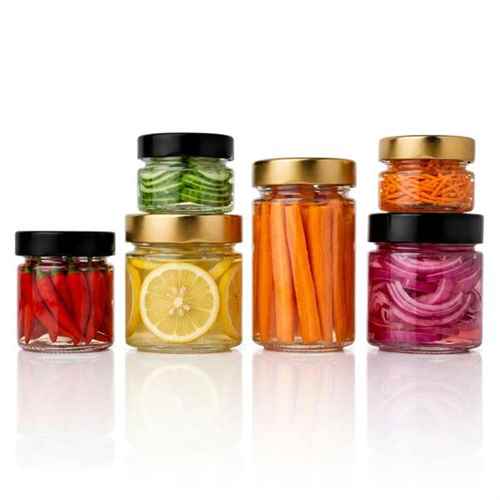
Honey jars, jam jars, pickle jars, spice jars, coffee jars and storage jars are commonly used for food products. Wide-mouth designs can make filling and product access easier, while airtight closures help protect dry or moisture-sensitive contents.
Glass cream jars are suitable for facial creams, balms and other personal care products. In these applications, the compatibility between the formulation, glass surface, closure and liner should be confirmed before mass production.
Candle and home fragrance packaging
Glass candle jars are commonly used for scented candles and wax-based products. The thermal performance of the selected glass should be considered when the container will be exposed to repeated heating during use.
Household storage
Glass storage jars can be used for grains, spices, nuts, dry food and other household products. Reusable glass construction also makes these containers suitable for long-term storage applications.
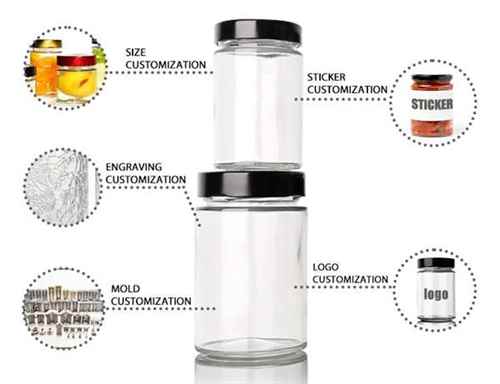
5. Customization Goes Beyond Adding a Logo
For private-label and branded packaging, customization can involve several components of the finished jar.
Depending on the product, buyers may request:
- Custom jar shapes
- Different capacities
- Glass colour
- Custom logos
- Screen printing
- Hot stamping
- Decals or labels
- Different lid materials
- Customized outer packaging
The important point is to decide these elements before production rather than treating decoration as a final-stage addition.
For example, the printing area may depend on the jar geometry, while the lid colour and material need to work with the overall packaging design.
6. Quality Control Should Follow Real Packaging Risks
Glass packaging has several practical quality risks. A suitable inspection plan should therefore cover more than appearance.
Important checks can include:
Leakage and sealing
The jar and closure need to maintain the required seal after assembly. Airtightness or leak testing can help identify problems before shipment.
Glass breakage
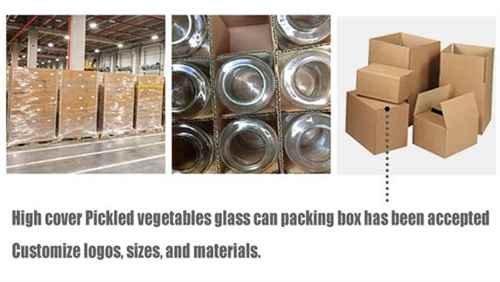
Glass jars are vulnerable to impact during handling and transportation. Appropriate dividers, cushioning and export cartons can reduce the risk of transit damage.
Thermal performance
For products exposed to temperature changes, thermal shock testing can help determine whether the selected glass is suitable for the application.
Material safety
For food-contact applications, buyers should request the applicable food-contact documentation and test reports for the finished packaging or relevant materials.
Appearance
Surface defects, bubbles, cracks, uneven walls, printing defects and closure damage should be included in the agreed inspection criteria.
A clear inspection standard is especially important for large orders because visual expectations can otherwise differ between the buyer and supplier.
7. Food-Contact Packaging Requires the Right Documentation
For food applications, compliance should be considered alongside the physical specifications.
The requirements depend on the destination market and the materials used in the complete packaging system. Buyers may need documentation covering the glass, coating, closure, liner or other food-contact components.
Instead of relying only on general statements such as “food grade,” a buyer should clarify:
- Applicable food-contact regulations
- Material specifications
- Test reports
- Certificate scope
- Closure and liner materials
- Intended food type
- Filling and storage conditions
This documentation becomes particularly important when glass jars are supplied to multiple markets with different regulatory requirements.
8. Packaging and Shipping Matter as Much as Production
A glass jar can meet its production specifications and still arrive damaged if the export packaging is not suitable.
For bulk shipments, the packaging plan should consider:
- Carton structure
- Dividers or internal protection
- Cushioning
- Palletization
- Container loading
- Drop and transport risks
Buyers should also clarify how defective or broken units will be handled and whether inspection records are available before shipment.
For international orders, logistics planning should be included in the packaging specification rather than discussed only after production is complete.
9. A Practical Specification for a Glass Jar RFQ
A detailed inquiry helps suppliers quote more accurately and reduces repeated communication.
A typical glass jar RFQ should include:
| Specification | Information to Provide |
|---|---|
| Application | Food, cosmetic, candle, household storage, etc. |
| Product | Honey, jam, spice, cream, candle, coffee, etc. |
| Capacity | Required fill volume |
| Shape | Round, square, hexagonal, straight-sided, etc. |
| Glass | Soda-lime, borosilicate or required material |
| Colour | Clear, amber, green or custom colour |
| Closure | Twist-off, screw lid, clamp lid, wooden lid, etc. |
| Decoration | Screen printing, hot stamping, label or blank |
| Quantity | Trial quantity and estimated annual demand |
| Destination | Country or market |
| Filling method | Manual, semi-automatic or automatic |
| Packaging | Carton, divider, pallet or other requirements |
Providing these details at the quotation stage allows the supplier to recommend a more suitable jar-and-closure combination.
10. Why an Integrated Packaging Supplier Can Simplify Projects
Glass jars are often purchased as part of a wider packaging system.
A food brand may need the jar, metal lid and printed decoration. A cosmetic project may require a glass jar together with a compatible closure. A larger packaging program may also involve glass bottles, PET packaging or aluminum cans.
Creative Package provides glass jars alongside glass bottles, PET preforms, plastic packaging, aluminum cans and caps and closures. This broader product structure can be useful for buyers managing several packaging categories within the same project.
Its current glass jar range includes food storage jars, Mason jars, honey jars, spice jars, jam jars and candle jars, with options such as metal, wooden and airtight closures.
11. What Buyers Should Confirm Before Sampling
Before requesting a sample, it is useful to have five points clearly defined:
- What will the jar contain?
- What capacity and opening are required?
- Which closure and sealing method will be used?
- What decoration and customization are needed?
- Which quality and compliance requirements apply to the destination market?
Once these points are fixed, sampling becomes much more meaningful. The buyer can evaluate not only how the jar looks, but also whether it works with the product, closure and filling process.
Conclusion
A glass jar is more than a container selected from a catalogue. Material, capacity, closure, decoration, filling conditions, quality control and transportation all influence whether the final packaging performs as expected.
For B2B buyers, the most efficient approach is to define the application first, build the jar and closure as one packaging system, and confirm quality and compliance requirements before production.
Creative Package supplies a broad range of glass jars for food, cosmetics, candles, home fragrance and storage applications, with customization options for different packaging projects.
A clear specification at the beginning gives both sides a better basis for sampling, quotation and bulk production.