How to Audit an Aluminum Can Manufacturer: Moving Beyond Brochure Claims to Factory Proof
Every aluminum packaging supplier claims they can run high-speed lines, apply a flawless inner liner, and hold tight tolerances. When you are at the final stage of sourcing—whether for a craft beer launch, a functional energy drink, or a specialty coffee line—brochure promises won't protect your filling line from jammed seamers or leakers.
Instead of asking a manufacturer if they have the capability, experienced buyers ask what proof they can pull from the floor today. Here is a practical framework for auditing an aluminum can supplier’s real-world production controls before you sign off on a purchase order.
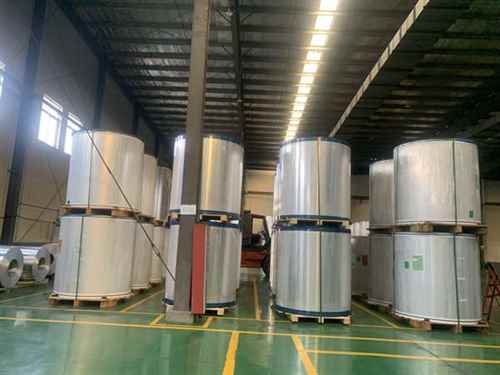
1. Separating Floor Reality from Sales Talk
A reliable supplier doesn't just show you a polished golden sample; they show you the paper trail and physical checkpoints that connect raw aluminum coils to your finished pallet. When evaluating a factory—virtually or on-site—break your audit down into four core verification areas.
| Audit Area | What You Are Looking For | The Proof to Request | Red Flag |
| Raw Material & Liner | Verification that food-grade alloy and BPA-free coatings meet spec before hitting the line. | Incoming batch Certificate of Analysis (COA) + chemical liner spec sheet. | "All our cans are food-grade," with no batch-linked COA. |
| Body Forming | Consistent wall thickness and necking from coil stamping to deep-drawing. | Live line video/observation + dimensional check against the golden sample. | Refusal to show active tooling or mid-run dimensional logs. |
| Coating Adhesion | Assurance that the internal lacquer won't crack or delaminate under carbonation or pasteurization. | Enamel rater (porosity) and cross-hatch adhesion test logs per batch. | Relying solely on the coating supplier's general datasheet. |
| Seal & Closure | Verification that cans hold pressure and lids/caps mate cleanly without micro-leaks. | 100% inline pressure/airtightness test logs + cap torque or double-seam teardown reports. | Sampling only a handful of cans per shift for leak checks. |
2. Walking the Line: Three Physical Checkpoints
If you are conducting a factory tour or a live video audit, focus your attention on three specific transitions on the production floor:
- Cupping and Wall Ironing: Watch how the aluminum coil is blanked into cups and drawn into a can body. Ask the floor engineer how often they check dome reversal pressure and wall thickness. Consistency here prevents crushed cans in your depalletizer later.
- Washing and Surface Prep: Before any ink or inner spray touches the metal, lubricants from the forming process must be stripped away. A clean, multi-stage washing station is non-negotiable; residual oil causes poor label adhesion and internal liner defects.
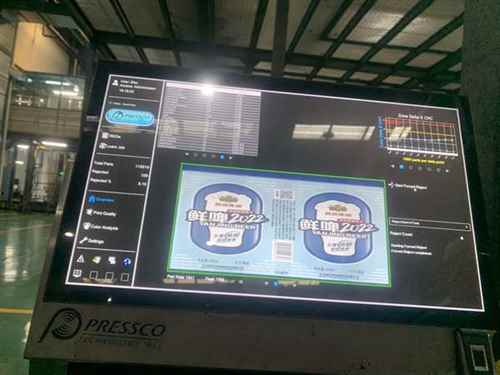
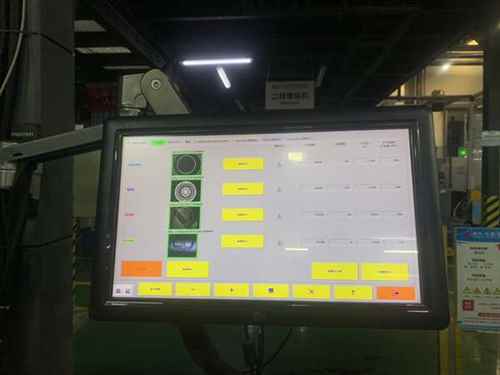
- Inline Vision and Leak Testing: Modern lines shouldn't rely on human eyes to catch pinholes or crooked prints. Look for automated optical inspection cameras checking decoration alignment, followed by inline light or pressure testers that automatically reject compromised shells before palletizing.
3. Locking in Sample-to-Mass-Production Consistency
The biggest risk in custom packaging isn't the first 50 samples—it is batch number three, six months later. To prevent quality drift, verify how the factory manages its retention samples.
Before mass production starts, you and the factory should sign off on a physical "golden sample" alongside a written inspection sheet defining your Acceptable Quality Limit (AQL). During production, the QC team should pull retained samples at set intervals and store them by batch code. If a shipment arrives at your co-packer with a seam issue or color shift, those retained samples are the only way to trace the root cause objectively.
4. Aluminum Cans vs. Rigid Plastic: A Quick Reality Check for Buyers
If you are still weighing aluminum cans against PET or HDPE bottles for a new beverage SKU, keep the operational trade-offs clear:
- Barrier Performance: Aluminum blocks 100% of UV light, which is critical for hop-forward beers, vitamins, and dairy-based coffees. However, oxygen protection is only as good as your seamer setup—a poorly rolled double seam will oxidize a drink just as fast as permeable plastic.
- Logistics vs. Handling: Empty and filled cans cube out pallets far more efficiently than round plastic bottles, cutting freight costs. The trade-off is denting; cans require tighter strapping, sturdy layer pads, and careful warehouse handling compared to impact-resistant PET.
- Decoration Flexibility: With digital can printing becoming widely accessible alongside traditional dry-offset printing, brands no longer need massive minimum runs just to get clean, full-wrap graphics without plastic shrink sleeves.
5. Pre-PO Questions to Send Your Supplier
Before finalizing commercial terms (such as MOQ, Incoterms like FOB or CIF, and deposit structures), send these five direct questions to your account manager. Keep commercial negotiations separate from technical qualification:
- "Can you share a redacted COA and coating adhesion test report from a recent production run of a similar beverage format?"
- "Is leak/airtightness testing performed inline on 100% of units, or via batch sampling?"
- "How long do you hold retained batch samples after shipment, and how are they indexed?"
- "Can we incorporate our specific AQL standards and functional test items directly into the pre-shipment inspection checklist?"
- "For threaded aluminum bottles or cans with lids, what torque-testing frequency is recorded during production?"
Putting Verification Into Practice with Creative Package
At Creative Package, we approach metal packaging procurement from the buyer's side of the table. Supplying custom aluminum beverage cans, threaded aluminum bottles, and specialty metal containers for global food and beverage brands, our production workflows are built around documented traceability rather than guesswork.
From verified BPA-free internal coatings and incoming raw material COAs to inline airtightness testing, torque checks, and structured batch retention, every order is backed by transparent pre-shipment inspection records. Whether you are scaling a standard 12 oz carbonated line or sourcing custom-printed specialty formats, our team works directly with your QA requirements before production begins.
Frequently Asked Questions
What is a realistic MOQ for custom aluminum cans? For standard mass-production runs using traditional offset printing, minimum order quantities typically start around 100,000 pieces per design, though undecorated (brite) cans or digitally printed runs may offer lower entry thresholds depending on the size.
How do I verify that the inner coating is actually BPA-free? Don't settle for a verbal "yes." Request the technical data sheet (TDS) for the specific internal epoxy-acrylic or polymer liner used, alongside the incoming batch Certificate of Analysis (COA) proving that specific material was applied to your run.
What should be included in a pre-shipment inspection (PSI) report? A solid PSI report should document dimensional measurements (height, flange width, neck diameter), visual defect counts against your agreed AQL, internal coating continuity/adhesion results, pressure/leak test pass rates, and pallet packaging integrity.
What are standard payment and shipping terms for international orders? Most cross-border orders operate under FOB, CIF, or EXW Incoterms, with standard payment terms structured as a 30% T/T deposit to schedule raw material and tooling, and the 70% balance settled against the pre-shipment inspection report and copy of the Bill of Lading.